
Brainrot Playground
Tappy GameCasual
3.367.00 Reviews
- Version
- 1.1.1
- Installs
- 5.00M
- Age Rating
- Teen
Screenshots
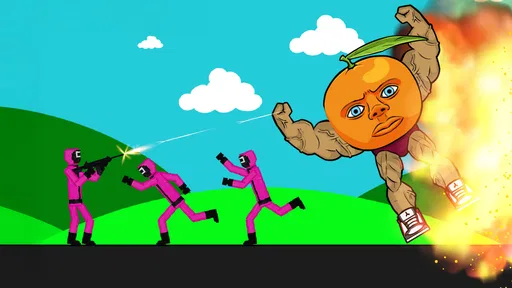
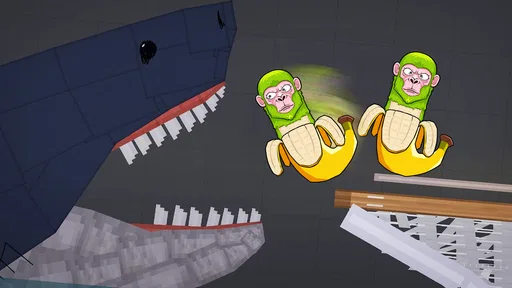
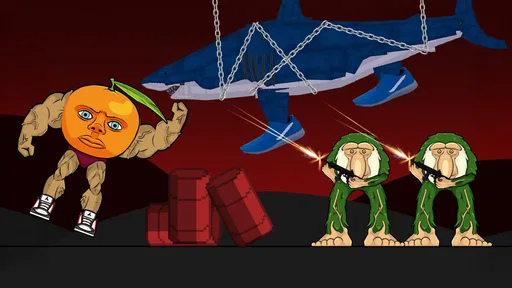
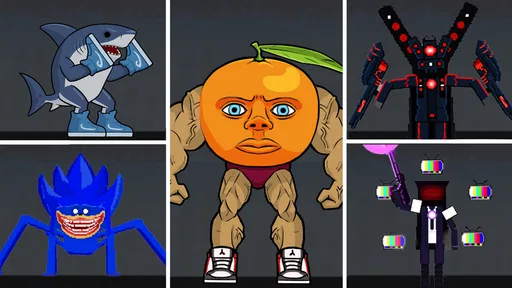
Our Review of Brainrot Playground
 Analysis by Appyee
I spent time with Brainrot Playground to see whether its promise of a creative sandbox actually turns into something worth returning to. Developed by Tappy Game, this free casual game puts experimentation ahead of a traditional campaign. The appeal is immediate: you can enter, try things, create a little chaos, and decide your own rhythm instead of following a long chain of missions.
That freedom is also the game’s biggest question mark. Without a clearly defined finish line, the experience depends on how much enjoyment you get from playing with the sandbox itself. I found it easy to start and entertaining in short bursts, but I also noticed that its long-term pull is less dependable than a casual game built around clear levels, daily goals, or a steadily unfolding story.
What the first sessions feel like
The best way to approach this game is not as a conventional puzzle title or a carefully structured adventure. It is closer to a playful digital toy, where the fun comes from seeing what happens when you interact with the available environment. The store summary describes it as a place for creativity and chaos, and that description is more useful than expecting a tightly scripted objective.
My early goal was simply to understand what the playground encouraged me to do. That sounds basic, but it matters here. In a level-based casual game, the first target is usually obvious: finish the stage, beat the timer, collect the required items, or reach the next screen. In this sandbox, the motivation comes more from testing possibilities and finding amusing situations for yourself.
That makes the opening approachable for players who dislike tutorials that overload them with instructions. You can pick it up for a few minutes and begin experimenting without committing to a lengthy session. It also makes the first impression highly personal. Someone who enjoys playful discovery may immediately see the attraction, while someone looking for a strong objective may wonder what they are supposed to chase.
Why the sandbox format works in short sessions
I think the game fits especially well into small gaps in the day. If I have a few minutes while waiting for an appointment or taking a break, I do not need to remember a complicated plot or rebuild a strategy from a previous level. I can open it, create a bit of disorder, and leave when the novelty wears off.
A useful approach is to give each session a small personal challenge. Instead of interacting randomly, I might focus on seeing how many different reactions I can create, arranging a scene in a particular way, or deliberately trying an unusual sequence. These self-made goals give the sandbox more shape without pretending that it has a formal mission structure.
That is one of the less obvious strengths of the design: the player can turn a loose playground into a series of tiny experiments. The trade-off is that the game does not do all the motivational work for you. If you need the app to tell you exactly what to do next, the freedom may feel more like a lack of direction.
What counts as progress?
Progress in a sandbox is harder to read than progress in a standard casual game. A new level, a completed chapter, or a visible score normally tells me that I have moved forward. Here, the progress signal is more personal. I become more familiar with the space, discover interactions I had not tried, and learn which kinds of setups produce the most entertaining results.
That learning curve can be satisfying, but it is not the same as unlocking a clearly measured achievement. Players who enjoy mastering a system may appreciate the gradual understanding. Players who want a constant stream of rewards may find the feedback less convincing, especially after the initial curiosity has faded.
I recommend treating the first few sessions as exploration rather than evaluation. The game makes more sense once you stop asking whether you are “winning” and start asking whether your experiments are becoming more interesting. This is also a good way to judge whether it belongs on your phone: if you naturally begin inventing your own tests, the format is probably working for you.
The absence of a conventional progress ladder changes how I measure value. I would not open it expecting the same satisfaction as completing a carefully tuned run of stages. Instead, I look for moments where the playground surprises me or gives me a funny result that I could not have predicted immediately. That kind of reward is real, but it is less consistent and less easy to compare with a score.
Challenge and pacing
The difficulty curve is not the main attraction. This is not the sort of casual game where the early stages teach one mechanic and later stages combine several mechanics under pressure. The challenge comes from figuring out how to use the sandbox, choosing what to test, and deciding when an experiment has reached a satisfying result.
That creates a gentle entry point. New players are unlikely to feel punished for not understanding everything immediately, and younger or less experienced players can explore at their own pace. At the same time, experienced mobile players may miss the rising tension that comes from tougher objectives, tighter timing, or increasingly demanding puzzles.
For me, the pacing works best when I impose a limit on a session. I might spend one short visit testing a single idea, then stop before the free-form nature begins to feel repetitive. This is a practical way to preserve the novelty. Trying to force a long play session can expose the thinness of the structure more quickly than the game’s intended casual rhythm does.
There is also a difference between difficulty and friction. A game can be easy while still being engaging if it constantly offers meaningful choices. Here, the amount of meaningful choice depends on how much variety you find in the playground. If your experiments start producing similar results, the experience may feel flat even though nothing is technically difficult.
What keeps you coming back?
The retention pressure is relatively light compared with casual games built around streaks, timers, or a long list of daily tasks. I did not feel pushed into a rigid routine. That is refreshing if you want a low-commitment game, because missing a day does not feel like losing a carefully maintained chain of progress.
On the other hand, gentle retention can become weak retention. A player who needs regular unlocks, escalating rewards, or a strong collection target may not find enough reason to return after the first wave of experimentation. The game’s replay value depends on whether the act of creating new situations remains enjoyable, not on a powerful external reward loop.
This is where I see the clearest divide between audiences. Creative players can make their own reasons to return, perhaps by trying a different style of setup each time. Completion-focused players may quickly ask what the next concrete milestone is. Neither response is wrong; they simply reveal whether the sandbox matches your preferred kind of motivation.
In-app purchases range from $0.99 to $29.99 per item, so I would approach optional spending carefully. The free entry point makes it sensible to test the core experience first and decide whether it already provides enough entertainment. I would not spend simply because the game feels unfinished after a short session; the better question is whether you have found a play style that you genuinely want to expand.
How it compares with familiar casual games
Compared with a typical match-style game, Brainrot Playground offers less formal momentum. A match game usually gives you a compact objective, a clear result, and an obvious reason to try again. This title is more open-ended, so it can feel less stressful but also less rewarding if you prefer visible performance feedback.
Compared with physics toys or simulation sandboxes, it is aimed at a lighter, more immediately accessible experience. You do not need to approach it like a serious construction tool. Its appeal is the quick discovery of playful situations rather than detailed planning or technical control. That makes it easier to share casually with someone who is curious, but it may not satisfy players looking for deep simulation.
It also differs from story-driven casual games. There is no reason to choose it if what you really want is character development, dialogue, or a sequence of narrative surprises. Its personality comes from the situations you create, not from a plot that steadily reveals itself.
My practical comparison is simple: choose this game when you want an open toy-like distraction; choose a level-based alternative when you want measurable advancement; choose a puzzle game when you want carefully designed problems; and choose a simulation title when you want more control and depth. The important point is not that one format is superior, but that this one asks you to supply more of the structure.
Audience, age rating, and everyday use
The game carries a Teen content rating, so I would check that fit before handing it to a younger child. That rating is worth taking seriously rather than assuming that a casual presentation automatically makes it suitable for everyone. Parents should also remember that free installation does not mean every optional item is free.
For an adult or older teen, the most natural use case is a short creative break. Imagine sitting on a train with enough time for a few experiments but not enough attention for a demanding strategy game. This is the kind of situation where the loose structure helps: you can begin without preparation and stop without worrying about abandoning a mission.
I would skip it if your ideal mobile game is built around a strong campaign, competitive ranking, or a carefully balanced difficulty climb. I would also be cautious if you dislike discovering your own objectives. The game is not a substitute for a traditional progression-focused casual title; it serves a different mood.
Technical fit and value
The game was released on December 4, 2024, and the current version is 1.0.9. It supports devices running Android 7.0 or later, which gives it a broad compatibility range for Android users. That makes it easier to consider on an older phone, although the experience will still depend on the device’s general performance and available space.
Its reach is substantial, with over five million installs, while the average rating sits at 3.2 from around two thousand ratings. I read that combination as a sign of curiosity and mixed satisfaction rather than a universal recommendation. Many people have been willing to try it, but the modest average suggests that the open-ended format will not work equally well for everyone.
The rating itself should not be treated as a final verdict. A sandbox can receive divided reactions because players judge it by different standards. One person may value the freedom and quick amusement, while another may see the same freedom as a missing objective. My own view is that the game should be judged after you have deliberately tested its creative side, not after a rushed first launch.
Small strategies that improve the experience
My first tip is to avoid exhausting every possibility in one sitting. The game benefits from distance. A short session leaves room for the next visit to feel like a fresh experiment, whereas a long attempt to force constant novelty can make the playground seem narrower than it is.
Second, use a simple “one variable” method. Change one part of your setup at a time, then observe what difference it makes. This turns random tapping into a lightweight experiment and helps you understand the game’s responses more clearly. It is especially useful when the opening freedom feels overwhelming.
Third, create a personal record of ideas you want to try later. You do not need a formal checklist from the game. A note on your phone with a few experiments can give the next session a purpose without turning the experience into homework. This works well for players who enjoy creativity but still want a sense of direction.
Finally, decide your spending boundary before exploring any optional purchases. Since individual items can cost from $0.99 up to $29.99, the free version is the sensible starting point. If the basic playground does not hold your attention, buying more will not solve the underlying mismatch between your expectations and the game’s open-ended design.
My progression verdict
Brainrot Playground is strongest as a casual creative sandbox, not as a conventional progression game. Its early goals are self-directed, its progress signals come from discovery rather than a visible ladder, and its difficulty stays gentle because experimentation matters more than mastery under pressure. That combination makes it welcoming and easy to fit into short breaks.
The same design limits its staying power. Players who need frequent unlocks, increasingly difficult challenges, or a clear campaign may feel that the pacing loses force. The game can remain entertaining when you actively invent reasons to return, but it does not appear to provide the same automatic pull as a title built around structured objectives.
My recommendation is therefore specific: try it if you enjoy playful experimentation and want a free game that does not demand a long commitment. Give it a pass if your satisfaction comes mainly from beating levels, improving a score, or completing a defined progression track. Tappy Game has made something approachable and deliberately chaotic, but whether it becomes a regular favorite depends almost entirely on how comfortable you are being your own game designer.
After testing it, I would keep it installed for occasional creative breaks rather than make it my main casual game. That feels like the fairest role for it. When I want a quick, low-pressure playground, it does the job; when I want challenge, measurable growth, or a reason to keep playing for another hour, I would reach for a more structured alternative.
Verdict
Strengths of Brainrot Playground
- Simple controls make it easy for younger players to start playing.
- Bright visuals and playful characters create an entertaining atmosphere.
- Short activities work well for quick gaming sessions.
- Offline access can make it convenient when no internet is available.
- The sandbox-style design encourages casual experimentation and creativity.
Limitations of Brainrot Playground
- The gameplay may feel repetitive after extended play sessions.
- Some content can seem too basic for experienced players.
- Ads may interrupt the experience, depending on the version installed.
- Performance can vary on older or less powerful devices.
- Limited depth may reduce its long-term appeal for some users.
Other Releases by Tappy Game
View All


Similar Picks in This Category
View All
My Talking Angela
Outfit7 Limited4.2

My Talking Tom
Outfit7 Limited4.3

Pou
Zakeh4.2

My Talking Tom 2: Pet Game
Outfit7 Limited4.3

Candy Crush Saga
King4.6

Bridge Race
Supersonic Studios LTD4.1
Frequently Asked Questions
What is Brainrot Playground?
Brainrot Playground is a casual entertainment game built around the popular “brainrot” internet trend, combining recognizable meme-style characters, humorous scenes, and simple interactive challenges. The experience is designed mainly for quick sessions rather than deep strategy, making it suitable for players who want something funny and easy to pick up. Gameplay may vary depending on the version available for Android or iOS.
How do you play Brainrot Playground?
The game generally focuses on tapping, dragging, selecting, or interacting with objects and characters across playful scenarios. Its controls are intentionally simple, so most users can understand the basics without reading a long tutorial. Progress usually comes from completing activities, discovering reactions, or unlocking additional content. Since updates can change the available modes, it is worth checking the in-game instructions after installation.
Is Brainrot Playground free to download and play?
Brainrot Playground may be available as a free download, but the exact business model depends on the platform and edition you install. Free versions can include advertising, optional purchases, or locked content that becomes available after completing certain tasks or paying. Before downloading, review the official store listing for pricing, in-app purchase details, and subscription information so there are no surprises.
Does Brainrot Playground require an internet connection?
Some parts of Brainrot Playground may work offline after the initial installation, especially basic interactions and previously loaded content. However, an internet connection can be required for advertisements, updates, cloud features, analytics, or newly added levels and characters. If offline access is important to you, test the game with mobile data and Wi-Fi disabled, because functionality can differ between devices and app versions.
Is Brainrot Playground safe for children?
Brainrot Playground has a colorful, humorous presentation, but parents should still check the official age rating and review the game before allowing younger children to play. Meme-based content can include unusual humor, advertisements, external links, or optional purchases. It is recommended to use parental controls, disable unauthorized purchases, and download the app only from the official Google Play Store or Apple App Store.
Play our best games!


